
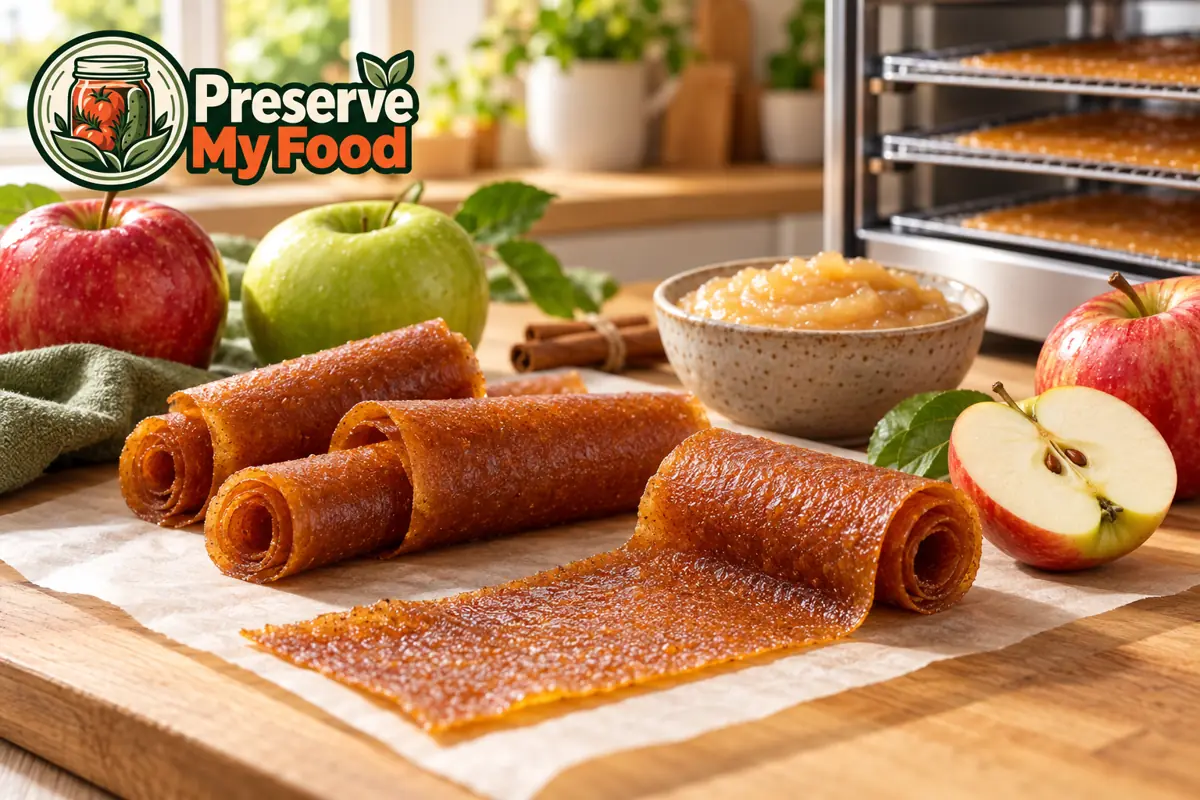
Apple fruit leather turns a bowl of applesauce—or fresh apples blended into purée—into thin, chewy homemade fruit rolls. It is a useful first project when you want to learn your dehydrator with a simple fruit base.
This guide covers both starting options, how to spread the mixture, what to look for during drying, and how to wrap the finished leather. Start with one tray and keep notes before scaling up.
New to making fruit rolls? Read our beginner guide to making fruit leather in a dehydrator for an overview of the equipment and drying process.

Fresh Apples or Applesauce?
Use applesauce when you want less preparation and a ready-to-spread base. Fresh apples give you the opportunity to choose the fruit yourself and compare different batches.
| Starting option | Preparation | Why choose it? |
|---|---|---|
| Smooth applesauce | Stir or blend to an even consistency. | A straightforward first tray with fewer preparation steps. |
| Fresh apples | Wash, peel, core, chop, and blend; cooking until tender is another option. | Useful when you have apples to use or want to compare varieties. |
Teresa Marrone’s apple leather guidance, published by Storey, describes both raw and cooked apple preparations. Cooking the chopped fruit until tender before puréeing is an option if your blender struggles with raw pieces.
Ingredients and Equipment
- Smooth apple purée or applesauce, enough for a thin layer on your tray
- Lemon juice to limit browning: 2 teaspoons per 2 cups of light-colored fruit, following NCHFP guidance
- Optional cinnamon or sweetener, according to taste
- A temperature-controlled dehydrator and compatible solid fruit leather liner
- A blender, spatula, and food-safe wrapping
Tray dimensions vary, so avoid assuming one container of applesauce will fill every machine the same way. Work with the layer thickness rather than trying to use up all the purée on one tray.
How to Make Apple Fruit Leather
1. Prepare a smooth apple base
For fresh apples, remove the peel and core, then chop. Blend thoroughly, or cook the pieces until tender and purée. Add only enough liquid to help the blender work; the goal is a spreadable mixture, not juice. With applesauce, blend out any remaining lumps.
2. Add lemon juice and optional flavoring
Stir the lemon juice evenly through the base. Taste before adding sweetener. If you want cinnamon, start lightly; you can make the next batch stronger after tasting the dried result.
3. Spread the tray
Use a dehydrator-compatible solid liner and spread approximately 1/8 inch thick. Keep the layer even and leave the airflow openings required by your machine unobstructed.
4. Dehydrate and check the center
Set the dehydrator to 140°F (60°C). NCHFP estimates about 6–8 hours for fruit leather, but conditions and equipment affect timing. Touch the center: it should not retain an indentation. Continue drying if it does.
5. Roll and wrap
Peel and roll the leather while warm. Let it cool, then wrap tightly. Cut the rolls into portions that suit how you plan to use them.
Common Apple Fruit Leather Problems
| What you notice | What to review |
|---|---|
| A wet middle | Check whether the center was spread more thickly than the edges; continue drying until done. |
| Rough or chunky texture | Blend more thoroughly next time, or compare a cooked purée with the raw version. |
| Difficulty removing the sheet | Check the liner’s instructions and whether the leather is adequately dried. |
| Uneven results between batches | Compare your notes on purée consistency, layer thickness, and tray position. |
A useful batch note might read: “Plain applesauce, one tray, no cinnamon.” Add the actual drying time and what you would change. That is more helpful than trying to remember several adjustments at once.
Storing Apple Fruit Leather
NCHFP recommends up to one month at room temperature for properly dried fruit leather, or up to one year tightly wrapped in the freezer. These periods depend on appropriate drying and packaging.
Write the preparation date and flavor on the package. Keep the plain batch separate from any flavored trial so you can compare them later.
Frequently Asked Questions
Can I make fruit leather with store-bought applesauce?
Yes. Applesauce can be dried on its own. A smooth version keeps the preparation simple; check the label if you want to control added ingredients.
Do I have to cook fresh apples first?
No. Both raw and cooked preparations are possible. Choose the method that gives you a smooth base with your equipment.
Can I add cinnamon?
Yes. Begin with a small amount and label that tray. Keeping part of the batch plain gives you a useful comparison.
How many rolls will one tray make?
That depends on the tray area and how wide you cut the strips. Avoid treating a fixed roll count as a measure of whether the batch is correct.
Start With One Simple Apple Batch
Choose applesauce for convenience or fresh apples for a project from scratch. Keep the first tray simple, record what happens, and use the results to guide your next batch.
Sources and Further Reading
- National Center for Home Food Preservation: Fruit Leathers — general method, drying checks, and storage.
- Storey / Hachette: How to Make Apple Fruit Leather, by Teresa Marrone — raw and cooked apple preparation options. Its drying settings differ; this article uses the NCHFP baseline above.
Leave a Reply